Source water transfer pvc tubing for Drainpipe, Water Supply, Irrigation
Compare 30 listings of water transfer pvc tubing suitable for drainpipe, water supply, and agricultural irrigation. Buyers can evaluate specifications, certifications, and pricing from verified Chinese manufacturers.
Key considerations
Products List




Comprehensive Sourcing Guide
Strategic Sourcing Guide for Water Transfer PVC Tubing
Understanding Material Composition and Physical Attributes
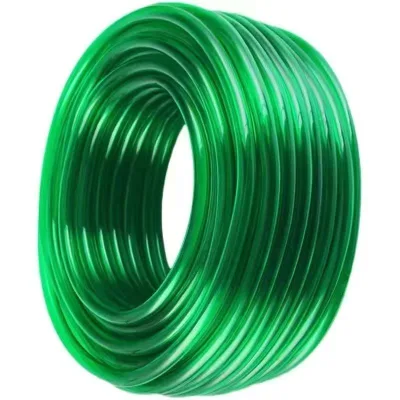
When sourcing water transfer PVC tubing, the primary focus must be on the fundamental material properties that dictate performance and longevity. The supplied product data indicates that the core material for these tubes is Polyvinyl Chloride (PVC), a thermoplastic widely recognized for its balance of durability and cost-effectiveness. It is critical to distinguish between rigid PVC pipes and flexible PVC tubing, as the application dictates the required flexibility. The observed product attributes confirm that the tubing is classified as "Hollow" and "Flexible," which is essential for applications requiring routing around obstacles or connecting machinery where rigid piping would fail.
The physical shape of the tubing is consistently observed as "Round," a standard geometry that ensures uniform flow dynamics and pressure distribution. However, buyers must verify the specific wall thickness and inner diameter, as the "Standard" attribute lists a range from 1/8" to 2". This wide variance suggests that a single supplier may offer a catalog of sizes, but the specific selection depends entirely on the flow rate requirements of the water transfer system. The "Hardness" attribute is listed as "Hoses," implying a specific durometer rating suitable for hose applications rather than rigid conduit.
Furthermore, the "Working Temperature" range is a critical technical specification. The data indicates a range of -30°C to 105°C. This thermal tolerance defines the operational envelope of the tubing. For water transfer applications involving hot water or systems exposed to varying environmental temperatures, this range must be strictly adhered to. Exceeding the upper limit of 105°C could lead to deformation, while temperatures below -30°C might compromise the flexibility and structural integrity of the PVC. Buyers should also note the "Water Absorption" rate, which is observed to be less than 0.01%. This low absorption rate is a significant advantage for water transfer, ensuring that the tubing does not swell or degrade when in prolonged contact with moisture, maintaining its dimensional stability over time.
Technical Specifications and Performance Standards
Beyond basic material composition, the technical specifications of water transfer PVC tubing determine its suitability for specific industrial and commercial uses. The "Type" is identified as "Thermoplastic Pipe," which classifies it within a broader category of plastic piping systems. The "Classification" further notes "Hybrid Insulation Materials" in some contexts, suggesting that certain variants may possess enhanced properties for specific environments, though the primary focus for water transfer remains the PVC composition.
The "Tensile Strength" is a vital metric for ensuring the tubing can withstand internal water pressure and external mechanical stress. The observed data lists tensile strength values ranging from "Excellent" to a specific range of 30~40MPa. When evaluating potential suppliers, buyers must request explicit tensile strength data for the specific SKU they intend to purchase, as "Excellent" is a qualitative descriptor that lacks the precision required for engineering calculations. The "Contraction Percentage" is noted between 1.0% and 2.5%, which is relevant for applications involving heat shrink or thermal expansion considerations.
Length specifications are another key variable in the procurement process. The standard lengths observed are 30m, 50m, and 100m. These long lengths reduce the number of joints required in a water transfer system, thereby minimizing potential leak points and installation time. However, the "Standard" attribute also references a size of 353560cm, which likely refers to the packaging dimensions or a specific product model rather than the tubing length itself. Buyers must clarify whether the 30m, 50m, or 100m options are available for their specific diameter requirements.
The "Voltage" attribute lists values such as 600V and <10KV. While water transfer tubing is primarily a fluid transport medium, these electrical ratings often indicate the tubing's suitability for protecting electrical wires within the same conduit or its use in environments where electrical insulation is a secondary requirement. For pure water transfer, these electrical ratings serve as an indicator of the material's dielectric strength and overall quality, but they should not be the primary selection criterion unless the tubing is intended for dual-purpose use.
Compliance, Certification, and Regulatory Verification
In the B2B procurement of PVC tubing, verifying compliance with international standards and certifications is non-negotiable. The supplied data lists a comprehensive array of certifications, including ISO, FDA, Reach, RoHS, CE, and ISO9001. The presence of "FDA" certification is particularly significant for water transfer applications, as it suggests the material is safe for contact with potable water or food-grade fluids. However, buyers must treat this as an observation of the supplier's portfolio rather than a guarantee for every product listed. The specific "Certificate" attribute mentions "ISO/FDA/Reach/RoHS/CE," indicating that the supplier claims adherence to these standards.
For quality management systems, the "Standard" attribute references ISO9001-2008. While this is a widely recognized quality standard, it is important to note that ISO9001 standards are periodically updated. Buyers should verify if the supplier holds the current version of the standard or if the 2008 version is still active for their specific production lines. Additionally, the "Certification No" E360625 is provided, which serves as a unique identifier for a specific certification. Procurement teams should request to see the actual certificate documents corresponding to this number to ensure validity and current status.
The "RoHS" and "Reach" certifications are crucial for environmental compliance, particularly for markets in the European Union and other regions with strict chemical regulations. These certifications confirm that the PVC tubing is free from specific hazardous substances. The "Fire Resistance" attribute lists "VW-1," which is a vertical wire flame test standard. While primarily relevant for electrical applications, this rating indicates a high level of fire safety, which may be a requirement for industrial facilities with strict fire codes.
Buyers must also consider the "Medical Device Regulatory Type" and "Application: Clinical" attributes found in the data. While these suggest the supplier offers medical-grade tubing, they may not apply to standard water transfer applications. If the water transfer system is for medical or pharmaceutical use, the "Disinfection" and "Disposable" attributes become highly relevant. For general industrial water transfer, these medical certifications are secondary but indicate a high level of manufacturing hygiene and quality control.
Cost Drivers and Procurement Parameters
The cost of water transfer PVC tubing is influenced by several factors, including material grade, diameter, length, and certification requirements. The observed "Price Range" in the market is listed as 0.01-10 USD. This wide range likely reflects the difference between small-diameter, short-length samples and large-diameter, long-length industrial rolls. It is imperative for buyers to understand that the lowest price point may not correspond to the quality required for their specific application.
The "MOQ" (Minimum Order Quantity) is a significant cost driver. The data shows a general "MOQ" of 1000m, but the observed range spans from 1 to 50,000 units. This discrepancy suggests that suppliers may have different policies for samples versus bulk orders. For a standard industrial order, the 1000m threshold is a realistic expectation. Buyers should negotiate based on their volume needs, as ordering closer to the upper end of the MOQ range often results in better unit pricing.
"Delivery Time" is another critical parameter affecting the total cost of ownership. The observed "Lead Time" is 15-30 days. This timeframe allows for production and shipping but requires careful planning to avoid project delays. For urgent projects, buyers may need to pay a premium for expedited shipping or accept a higher unit cost for smaller, immediate stock orders. The "Product Origin" is listed as "China," with a specific location in "Shenzhen Guangdong China." This geographic concentration implies a mature supply chain but also highlights the importance of verifying logistics capabilities and potential shipping delays due to port congestion or regulatory changes.
The "Product Packing" is listed as "Nylon Woven Bag" or "Carton." Proper packaging is essential to prevent damage during transit, especially for flexible tubing that can be kinked or crushed. Buyers should ensure that the packaging specifications match the shipping method and that the supplier includes protective measures for long rolls. The "Sample Supplied" attribute indicates that suppliers are willing to provide samples, which is a valuable tool for verifying quality before committing to a large order. However, buyers should be aware that sample costs and shipping fees may apply.
Typical Applications and Usage Scenarios
The versatility of PVC tubing is evident in the diverse "Usage" categories listed in the data. The primary applications include "Drainpipe," "Water Supply Pipe," and "Agricultural Irrigation Pipe." These uses highlight the tubing's suitability for both pressurized and non-pressurized water transfer systems. In agricultural settings, the flexibility and chemical resistance of PVC make it ideal for irrigation networks that require routing through uneven terrain.
Beyond water transfer, the "Application" attribute lists "Wire & Cable Protection," "Machine Protection," "Communication industry," and "Automotive Harnessing." This indicates that the same tubing can serve dual purposes, protecting electrical systems while also managing fluid lines. In the automotive and communication industries, the "Fire Resistance" and "Voltage" ratings become critical. The tubing's ability to withstand high temperatures and provide electrical insulation makes it a robust choice for complex machinery where space is limited and safety is paramount.
The "Type" of "Thermoplastic Pipe" and "Insulation Sleeve & Tube" suggests that the product line extends beyond simple water transfer. In clinical or medical applications, the "Disinfection" and "Disposable" attributes point to single-use scenarios where hygiene is the primary concern. For industrial machinery, the "Machine Protection" use case implies that the tubing is used to shield sensitive components from water, dust, and mechanical wear.
Buyers should carefully match the specific application to the tubing's attributes. For example, a water supply system requiring high pressure will need tubing with verified tensile strength and appropriate wall thickness, whereas an agricultural irrigation system might prioritize flexibility and UV resistance. The "Color" attribute is listed as "Color," suggesting that tubing is available in various colors, which can be useful for color-coding different fluid lines in a complex facility.
Supplier Evaluation and Quality Control Protocols
Evaluating a supplier for water transfer PVC tubing requires a rigorous assessment of their manufacturing capabilities and quality control processes. The "Brand" "Sunbow" is mentioned in the data, but buyers should not rely on brand recognition alone. Instead, they should verify the supplier's production capacity, quality assurance protocols, and track record. The "Certification" list, including ISO9001, RoHS, and Reach, provides a baseline for compliance, but buyers must request audit reports or third-party verification to confirm these claims.
Quality control should begin with the raw materials. The "Material" is specified as "PVC" and "Plastic," but the grade of PVC (e.g., rigid vs. flexible, unplasticized vs. plasticized) must be confirmed. The "Chemistry" attribute mentions "Hybrid Insulation," which may indicate a proprietary blend. Buyers should request material safety data sheets (MSDS) and technical data sheets (TDS) to understand the exact chemical composition and its implications for water transfer.
Testing is a crucial component of quality control. The "Tensile Strength" and "Working Temperature" ranges must be validated through independent testing. Buyers should request test reports for the specific batch of tubing they intend to purchase. The "Fire Resistance" rating of VW-1 should be verified against the relevant test standards. Additionally, the "Water Absorption" rate of less than 0.01% should be confirmed through laboratory testing to ensure the tubing meets the required performance standards.
The "Sample Supplied" attribute is a valuable tool for initial evaluation. Buyers should order samples to test for flexibility, durability, and compatibility with their specific water transfer systems. The "Standard" attribute references "ISO9001-2008," but buyers should ensure that the supplier's quality management system is current and effectively implemented. The "Certification No" E360625 should be cross-referenced with the issuing body to ensure authenticity.
Long-Term Procurement and Supply Chain Resilience
Long-term procurement of water transfer PVC tubing requires a strategic approach to supply chain management. The "Delivery Time" of 15-30 days is a standard timeframe, but buyers should plan for potential disruptions. The "Location" in Shenzhen, Guangdong, China, places the supplier in a major manufacturing hub, which generally offers reliable logistics but may be subject to regional disruptions. Buyers should develop contingency plans, such as maintaining safety stock or identifying alternative suppliers, to mitigate risks.
The "MOQ" of 1000m is a significant commitment. Buyers should negotiate flexible terms that allow for incremental ordering if their project scope changes. The "Price Range" of 0.01-10 USD suggests that unit costs can vary significantly based on volume and specifications. Buyers should seek long-term contracts that lock in pricing or provide price protection against market fluctuations.
Sustainability is an increasingly important factor in procurement. The "RoHS" and "Reach" certifications indicate compliance with environmental regulations, but buyers should also inquire about the recyclability of the PVC tubing and the supplier's sustainability practices. The "Product Packing" in "Nylon Woven Bag" or "Carton" should be evaluated for its environmental impact, with a preference for recyclable or biodegradable packaging options.
Finally, the "Brand" and "Certification" status should be monitored over time. Suppliers may undergo changes in ownership, management, or production processes that could affect product quality. Buyers should establish regular review cycles to ensure that the supplier continues to meet the required standards and performance expectations. By maintaining a proactive approach to supplier evaluation and quality control, buyers can ensure a reliable and cost-effective supply of water transfer PVC tubing for their operations.
FAQs
What certifications are available for water transfer pvc tubing?
The tubing comes with ISO, FDA, Reach, RoHS, and CE certifications. Buyers should verify specific certificate numbers like E360625 to ensure validity for their regulatory requirements.
How long is the delivery time for orders?
The standard delivery time ranges from 15 to 30 days. This lead time applies to production and initial shipping from the origin in Shenzhen, Guangdong, China.
Which specifications are available for the tubing sizes?
Available sizes range from 1/8 inch to 2 inches with lengths of 30m, 50m, or 100m. The working temperature tolerance is between -30 and 105 degrees Celsius.
Can I get samples before placing a bulk order?
Yes, samples are supplied for verification purposes. Buyers should note that while the general MOQ is 1000m, sample requests allow for testing material properties like tensile strength.
What is the minimum order quantity for this product?
The standard minimum order quantity is 1000 meters. However, observed ranges vary from 1 unit to 50000 units depending on the specific supplier and product type.
Which materials are used for the water transfer tubing?
The primary material is Polyvinyl Chloride (PVC), classified as a thermoplastic pipe. Some variants may also be described as plastic with hybrid insulation properties.
How is the product packed for shipping?
Packaging options include Nylon Woven Bags or Cartons. Proper packaging ensures the flexible tubing remains undamaged during transit from the manufacturing location.